Digital marketing is no longer just a buzzword. It is how business gets done today.
People spend hours every day online scrolling through social media, searching on Google, watching videos, reading blogs, and checking email. If your business is not showing up in those places, you are missing real opportunities.
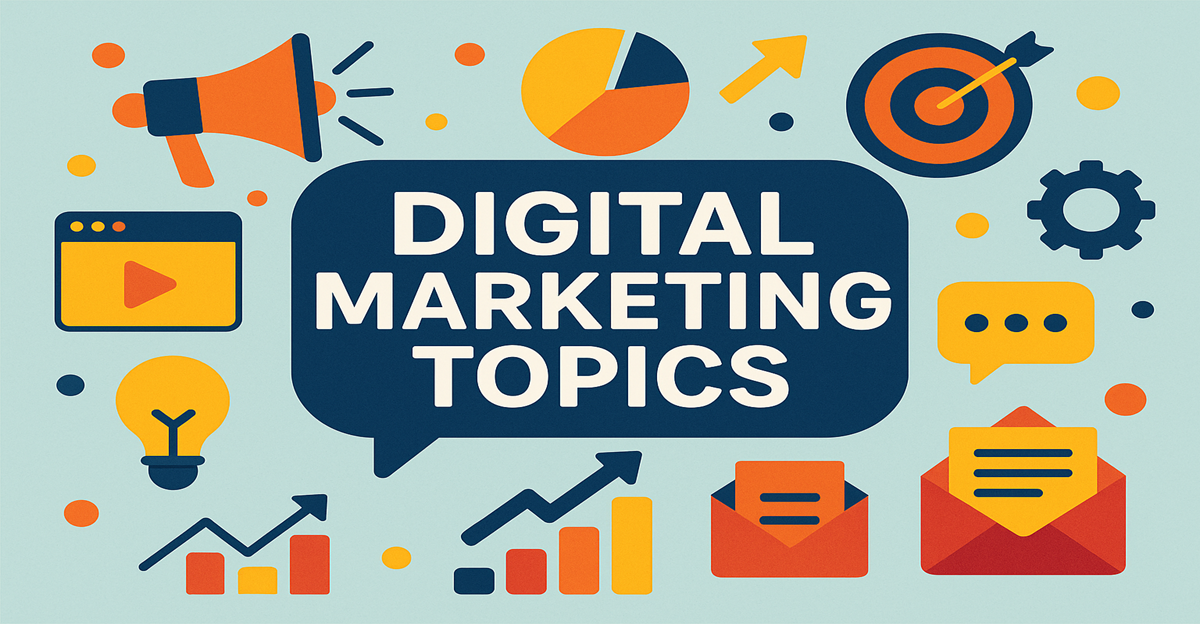
At its core, digital marketing is how businesses connect with people online through search engines, social media, email, websites, blogs, video content, and paid advertising.
It is faster, more targeted, and easier to measure than many traditional marketing methods such as TV, radio, newspapers, and print ads.
In this guide, we will break down the key parts of digital marketing and show how businesses can use them to attract attention, build trust, and turn visitors into customers.
What Is Digital Marketing?
Digital marketing is the process of promoting a business, product, service, or opportunity using online channels.
These channels may include search engines like Google, social media platforms like Facebook, Instagram, TikTok, and LinkedIn, email marketing, websites, blogs, videos, and online advertising.
Unlike traditional marketing, digital marketing allows businesses to track results more accurately. You can measure clicks, visits, leads, sales, email opens, conversions, and more.
This makes digital marketing especially powerful for small businesses, affiliate marketers, network marketers, bloggers, and entrepreneurs who want to reach the right people without wasting money.
If you are new to my site, you can learn more about my background and marketing experience on my About Me page.
Why Digital Marketing Matters Today
Your audience is already online.
They are searching for answers, comparing products, reading reviews, watching videos, and deciding who they trust. If your business does not appear during that process, another business probably will.
Digital marketing helps you:
- Increase online visibility
- Build trust with your audience
- Drive traffic to your website
- Generate leads and sales
- Promote affiliate or network marketing offers
- Measure what is working
- Improve your message over time
The businesses that succeed online are usually the ones that show up consistently, provide value, and make it easy for people to take the next step.
The Core Channels of Digital Marketing
A strong digital marketing strategy usually includes several channels working together.
1. Search Engine Optimization
Search Engine Optimization, or SEO, helps your website show up when people search online for topics related to your business.
For example, if someone searches for digital marketing tips, affiliate marketing strategies, or how to grow a business online, SEO helps your content become easier to find.
You can learn directly from Google’s own SEO Starter Guide to better understand how search engines discover and rank content.
2. Social Media Marketing
Social media marketing helps you build visibility, relationships, and trust through platforms like Facebook, Instagram, TikTok, YouTube, and LinkedIn.
Social media works best when you focus on conversation, not just promotion. People respond to helpful content, simple tips, personal stories, and clear messages.
For more on short-form content and social visibility, read my article The Overnight Viral Formula: How To Blow Up On TikTok.
3. Content Marketing
Content marketing is the process of creating useful content that educates, informs, entertains, or inspires your audience.
This can include blog posts, videos, podcasts, guides, infographics, social media posts, and email newsletters.
Good content answers real questions. It helps people solve problems before asking them to buy anything.
4. Email Marketing
Email marketing gives you a direct way to stay connected with your audience.
Unlike social media, where algorithms control who sees your posts, email allows you to communicate directly with subscribers who have already shown interest in what you offer.
Services like Mailchimp provide helpful email marketing resources for beginners and businesses.
5. Pay-Per-Click Advertising
Pay-per-click advertising, also known as PPC, allows businesses to pay for targeted traffic through platforms like Google Ads, Facebook Ads, and other advertising networks.
With PPC, you can show your offer to people based on search terms, interests, location, behavior, and more.
You can learn more about paid search advertising from Google Ads.
Content Marketing: The Heart of Digital Growth
If digital marketing has a backbone, it is content.
Content marketing is not just about publishing random blog posts. It is about creating information your audience actually wants and needs.
The best content usually does one or more of the following:
- Answers a question
- Solves a problem
- Explains a topic clearly
- Builds trust
- Shows experience
- Helps people make better decisions
Before creating content, ask yourself:
- Who am I trying to reach?
- What problem are they facing?
- What are they searching for?
- What would help them right now?
When your content speaks directly to those questions, it becomes more useful to readers, search engines, and AI platforms like ChatGPT, Gemini, Grok, and others.
SEO: Getting Found on Search Engines and AI Platforms
SEO is what helps your content get discovered.
But today, SEO is not only about Google rankings. Well-written, well-structured content can also help AI platforms understand what your page is about.
That means your content should be clear, helpful, organized, and easy to summarize.
On-Page SEO
On-page SEO includes the things you control directly on your website, such as:
- Page titles
- Headings
- Keyword usage
- Meta descriptions
- Internal links
- Image alt text
- Readable paragraphs
Off-Page SEO
Off-page SEO includes signals outside your website, such as backlinks, mentions, shares, and recommendations from other websites.
Technical SEO
Technical SEO includes site speed, mobile-friendliness, security, and how easy it is for search engines to crawl your website.
Google’s PageSpeed Insights tool can help you check your website speed and performance.
Social Media Marketing: Building Real Connections
Social media marketing works best when you remember one simple truth: people connect with people.
Businesses often make the mistake of only posting promotions. But social media is more powerful when you use it to build relationships.
Each platform has its own style:
- Facebook is good for community and conversation
- Instagram is strong for visuals and lifestyle content
- TikTok works well for short, attention-grabbing videos
- LinkedIn is useful for professional and business content
- YouTube is powerful for education and long-term search visibility
If influencer marketing is part of your strategy, you may also find my article Identifying The Right Influencer For Your Brand helpful.
PPC Advertising: Fast Traffic and Measurable Results
SEO and content marketing are powerful, but they often take time.
PPC advertising can help you get traffic faster.
With PPC, you pay when someone clicks your ad. This can work well when you have a clear offer, a focused landing page, and proper tracking in place.
To make PPC work, you need to:
- Choose the right keywords
- Write clear ad copy
- Target the right audience
- Track conversions
- Test different ads
- Adjust your budget based on results
PPC should not be treated as a “set it and forget it” strategy. The best campaigns are reviewed, tested, and improved over time.
Blending Traditional and Digital Marketing
Digital marketing does not mean traditional marketing is dead.
In fact, traditional and digital marketing can work together very well.
For example:
- A postcard can send people to a website
- A print ad can promote an email signup page
- A business card can include a QR code
- An offline conversation can lead to a social media connection
The goal is to create a smooth experience between offline and online marketing.
This is especially useful for entrepreneurs, affiliate marketers, and network marketers who want to build both personal trust and online visibility.
Digital Marketing for Affiliate and Network Marketers
Digital marketing is especially valuable for affiliate marketers and network marketers because it helps create leverage.
Instead of only reaching people one at a time, you can create content that works for you around the clock.
A blog post, video, email sequence, or social media post can continue attracting visitors long after it is published.
If affiliate marketing is part of your business model, you may enjoy my Wealthy Affiliate Review, where I discuss a platform designed to help people learn online business and affiliate marketing.
Final Thoughts: Why Digital Marketing Is Essential
Digital marketing is no longer optional. It is foundational.
To succeed online, businesses need to show up where their audience spends time, provide real value, and use data to improve their message.
The most effective digital marketing does not feel pushy. It feels helpful.
It educates. It guides. It builds trust.
When you combine SEO, content marketing, social media, email, and paid advertising, you create a stronger online presence and more opportunities for growth.
That is the real power of digital marketing.
About the Author
Keith Stieneke is an experienced marketer with roots in traditional advertising, having published Opportunity Assistance and Network Growth Opportunities in the late 1980s and early 1990s. Today, he focuses on digital marketing, combining proven fundamentals with modern strategies like SEO, content marketing, affiliate marketing, and social media to help businesses grow online.
Learn more about Keith and Marketing Success here: About Keith Stieneke.